
Rather than designing buildings, I design conditions for things to happen | Javier Peña Ibáñez - Concéntrico
Inviting a rethinking of the relationship with the city, Concéntrico is a significant platform that transforms the Spanish city of Logroño each year with temporary interventions, installations, and public space experiments. Situated at the intersection of architecture, design, and art, this festival treats the city not merely as a backdrop, but as an active actor.
Founded and led by Javier Peña Ibáñez , Concéntrico brings together artists from diverse disciplines to explore new ways of engaging with the city. These temporary but impactful interventions make the potential of public space visible once again.
In this interview, Javier Peña Ibáñez and I discussed the origins of Concéntrico, how the festival operates, and how our relationship with the city has transformed. An inspiring conversation for anyone who thinks, creates, and dreams about public space. Enjoy reading!
Interview: Doğu Güngör
Who is Javier Peña Ibáñez? When someone asks you what you do for a living in a setting where they don't know you, how do you usually respond?
I generally describe myself as an architect who works through curation. My work is based on creating frameworks within which others can intervene in the city.
So, rather than designing buildings, I design the conditions under which things can happen . The main platform where I bring this to life is Concéntrico.
I'm sure many people interested in the city, like myself, are discovering Concéntrico through various sources. But since I've found you, I'd like to ask you directly what is Concéntrico?
Concéntrico is an international architecture and design festival held annually in Logroño. It functions as a kind of laboratory for urban innovation; we test ideas on a scale of one through installations, exhibitions and public programs. Our aim is to explore how public space can be used in different ways and to activate new forms of collective living.

The story behind Concéntrico's creation is quite inspiring. What was the main motivation that drove you to start this festival? How has it transformed from that initial idea to where it is today?
It all started with a simple intuition, the idea that by temporarily transforming the city, we could experience it differently. Initially, it was more about visibility, bringing architecture into the public sphere and making it more accessible. Over time, it evolved into a more complex structure.
It's no longer just about placing objects, but about constructing narratives, working with institutions, and addressing issues such as climate, identity, and the social use of public space.
So it went from being just an event to becoming a platform.
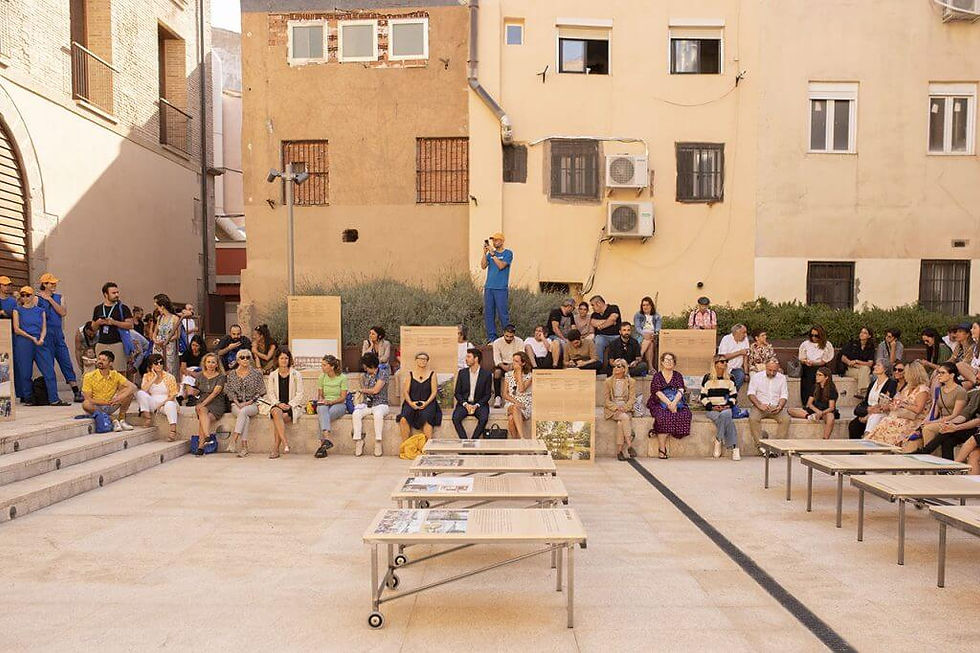
Many young designers and architects who follow well urban things are wondering how they can get involved in such platforms. Could you elaborate a little on the participation process for Concéntrico? (How does the open call process work? What do you expect from participants? What are the most decisive criteria in selecting a project? How does the funding process proceed—is it covered by the participant, the festival, or sponsors?)
Actually, there are two main ways. One is through open calls. We hold international competitions every year. Participants submit a proposal (usually a single sheet + concept). The jury selects the finalists and winners. The other way is through invitations . We directly invite teams that produce work that aligns with the themes we address.
What we're looking for isn't completed architectural projects, but strong ideas: openness, its relationship with public space, feasibility, and its potential to engage with people.
In terms of funding, Concéntrico covers the production, logistics, and wages of the selected teams. Participants do not need to finance the project with their own resources. We work with public institutions and cultural partners to make the process possible.
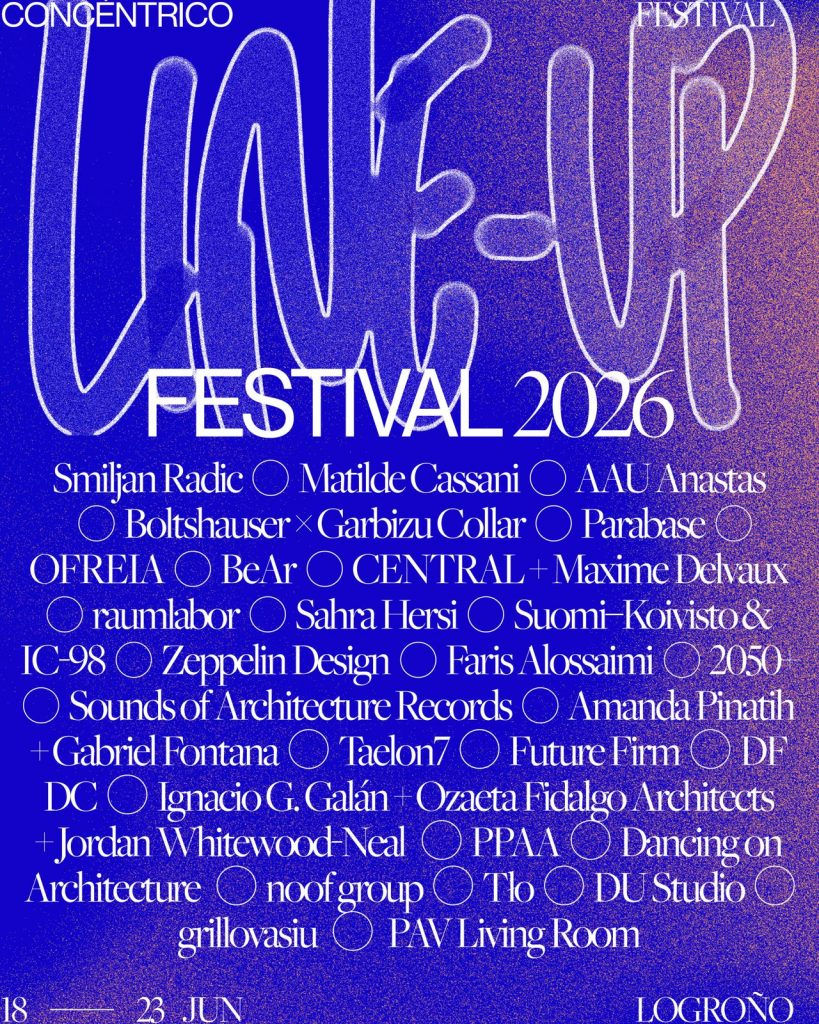
This year, the 12th edition of the festival will take place between June 18th and 23rd. What kinds of projects, themes, or new approaches can we expect in the 2026 program? What excites you the most this year?
The 2026 edition is structured around three main themes: Identity and Fiction, Urban Ecologies and Temporary Actors. There is a marked shift towards more performative, collective, and process-oriented practices.
What excites me most is that the projects go beyond objects, that they aim to create situations. Spaces that offer experiences such as coming together, playing, cooling off, and listening. The focus is no longer on form, but on what happens in that space.
For years, you've been establishing a dialogue within the city through temporary interventions and installations. Looking back from today: How has the relationship between the city and its people changed? Do you think the role of design in shaping this relationship has become even more critical?
There is a growing awareness that public space is not neutral, but rather something we actively construct. People are now more conscious of issues such as climate, social interaction, and access.
Design has become more critical, but it has also taken on a more open structure. It's no longer just about solving problems; it's often about enabling new possibilities that are temporary, recyclable, and collective.
Bringing a festival like Concéntrico to life and making it sustainable must require a strong organizational structure. What kind of collaboration model do you establish with local authorities, sponsors, and producers? What were the biggest challenges you faced in this process, and how did you overcome them?
Our model is based on harmony rather than hierarchy. We work with municipalities, cultural institutions, and international partners; each contributing to the process in different ways, such as through funding, information, and networks.
The biggest challenge is always coordination. Different timelines, expectations, and scales. What helps us overcome this is having a very clear conceptual framework. This way, everyone understands clearly why the project exists.

Let's look to the future for a moment. How do you think Concéntrico will evolve in the coming years? Are there any ideas or formats that you haven't implemented yet but that excite you?
I see it expanding as more than just a festival, but as a network. More international collaboration, more year-round activities, and formats that go beyond installations, such as education, research, and publications.
I'm particularly interested in long-term effects. I'm excited about how temporary interventions can lead to lasting transformations.
Finally, a personal question of curiosity. What are the three names of urban design/public space project designers who have influenced you the most?

Matilde Cassani has a remarkable ability to create temporary spaces that redefine rituals and collective use in the public sphere.

I find Leopold Banchini's approach of activating space directly and instantly through lightweight structures and material intelligence very successful.

I would also include Willem de Haan on this list because of his approach to public space through narrative, perception, and subtle spatial interventions.

Comments